 Ryan Ensby
We hope you love the products we recommend and just so you know that as an Amazon Associate EngineHoist.net may earn from qualifying purchases.
Cummins Engine Stand (US): What to Buy and What to Check First
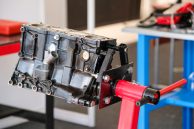
If you’re working on a Cummins diesel (or a similarly heavy inline-6), the “engine stand” decision is less about the stand’s advertised number and more about stability, mounting fitment, and the adapter/head design. Many generic 750–1,000 lb stands are aimed at typical gas engines. A Cummins setup can be heavy, long, and awkward, and that leverage is what breaks stands (or makes them feel unsafe).
Quick guidance:
- If you’re truly working with a heavy diesel long block, treat this as heavy-duty stand + correct adapter territory.
- Don’t buy until you confirm your mounting pattern and the stand’s head/adapter compatibility.
Engine stands cluster: Best engine stand (US buyer guide)
1) The 3 things to confirm before you buy a stand for a Cummins
A) Real load and leverage (not just “engine weight”)
- Is it a long block only, or are accessories still attached?
- Is the flywheel/housing still on?
- Will you rotate it often (rotation increases stress)?
The longer/heavier the assembly, the more leverage you place on the rotating head and the stand’s spine. That’s where light stands twist.
B) Mounting fitment (pattern and spacing)
Diesels often need specific adapter solutions. Before buying, confirm:
- What holes you’re mounting to (rear of block / bellhousing pattern / adapter plate).
- What arm/plate style the stand uses (4-arm adjustable head vs dedicated adapter plate).
- Whether the stand’s arms can reach the pattern without unsafe offsets.
C) Rotation head design and locking
- Look for a positive lock (pin/plate), not a vague friction clamp.
- Rotation should feel controlled, not sloppy. If the head flexes under load, that’s a red flag.
2) What capacity engine stand for a Cummins (rule of thumb)
For heavy diesels, you generally want a heavy-duty / diesel-rated stand rather than a generic 750–1,000 lb unit. The right answer depends on your exact engine and what’s attached, but the safe approach is:
- Choose a stand with a clear, credible rating and a wide base.
- Prefer solutions that support the engine correctly (often via adapter systems) rather than “universal arms” at extreme extension.
3) Practical shopping checklist (what to look for)
- Base width and stance: wider is safer, especially if you rotate the engine.
- Casters: bigger and higher quality is better on real garage floors.
- Head/adapter: confirm compatibility before purchase.
- Hardware: use correct grade bolts and proper engagement.
Related: What size bolts for an engine stand?
4) Mounting and handling (safe workflow)
- Use an engine hoist to support the engine while you align the stand head/arms.
- Install all mounting bolts loosely first, then tighten evenly.
- Before rotating, test stability and check that the lock engages fully.
Related: How to mount an engine to a stand
Related guides
Disclosure: EngineHoist.net may earn from qualifying purchases. See affiliate disclosure.